Making Master Guitars Book
New Impression (2026)
Language: English
Hardcover
336 pages
Size: 210 mm x 297 mm
ISBN: 0 7090 4809 2
Weight: 1,65 Kg
DESCRIPTION & CONTENTS


DESCRIPTION & CONTENTS
This is a must-have reference book for anyone who wants to build a traditional Spanish guitar. Considered by many as the Bible of guitar making, it can be found in many of the world’s great guitar workshops, used by renowned makers across the globe. It is probably the most famous book ever written on guitar construction.
Moreover, even for those who are not guitar makers but are passionate about the world of guitarmaking, guitarists, dealers, historians, collectors… and wish to gain precise and reliable knowledge about traditional building methods, this book is an essential resource — one to own, enjoy, and learn from, given the wealth of information it offers.
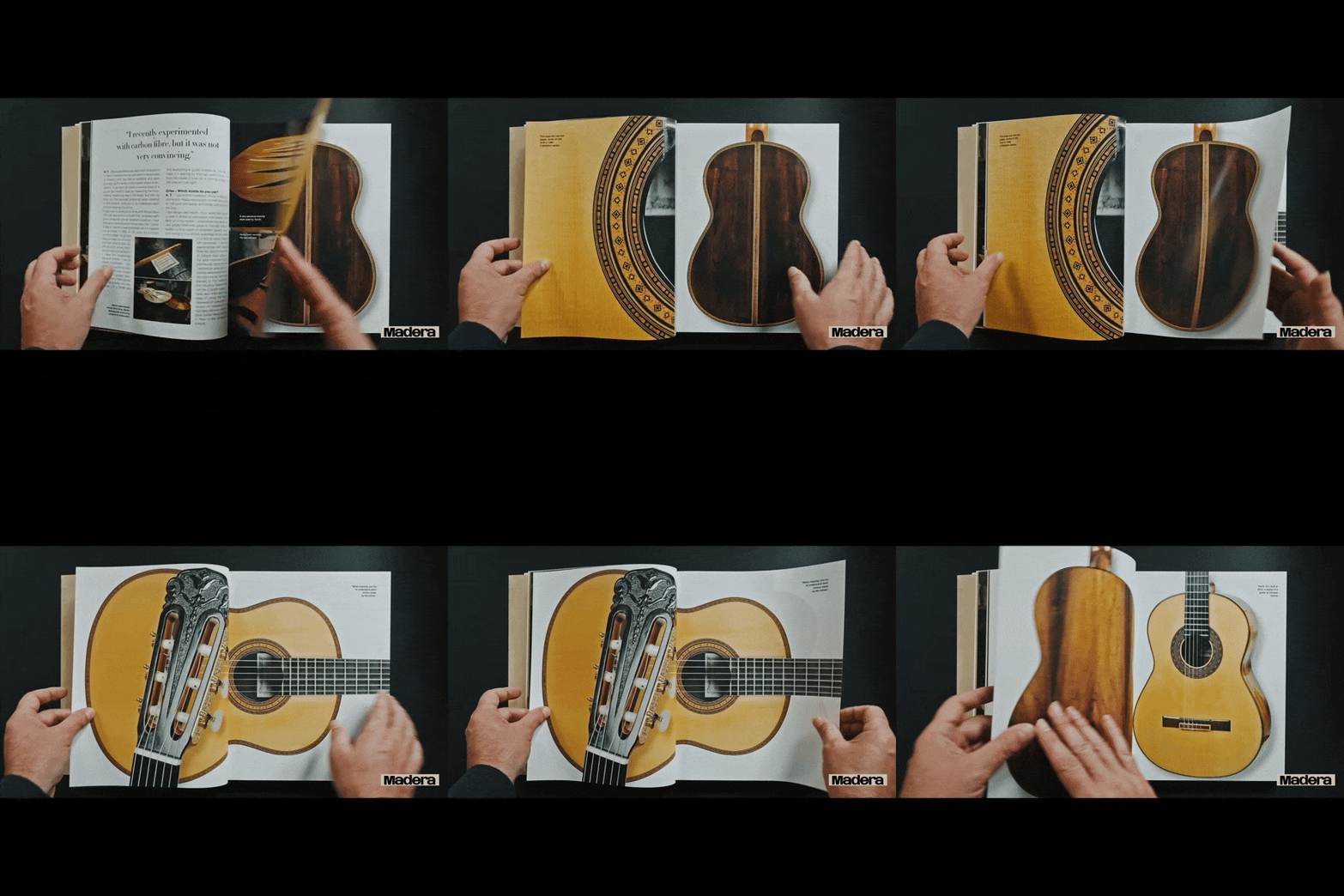
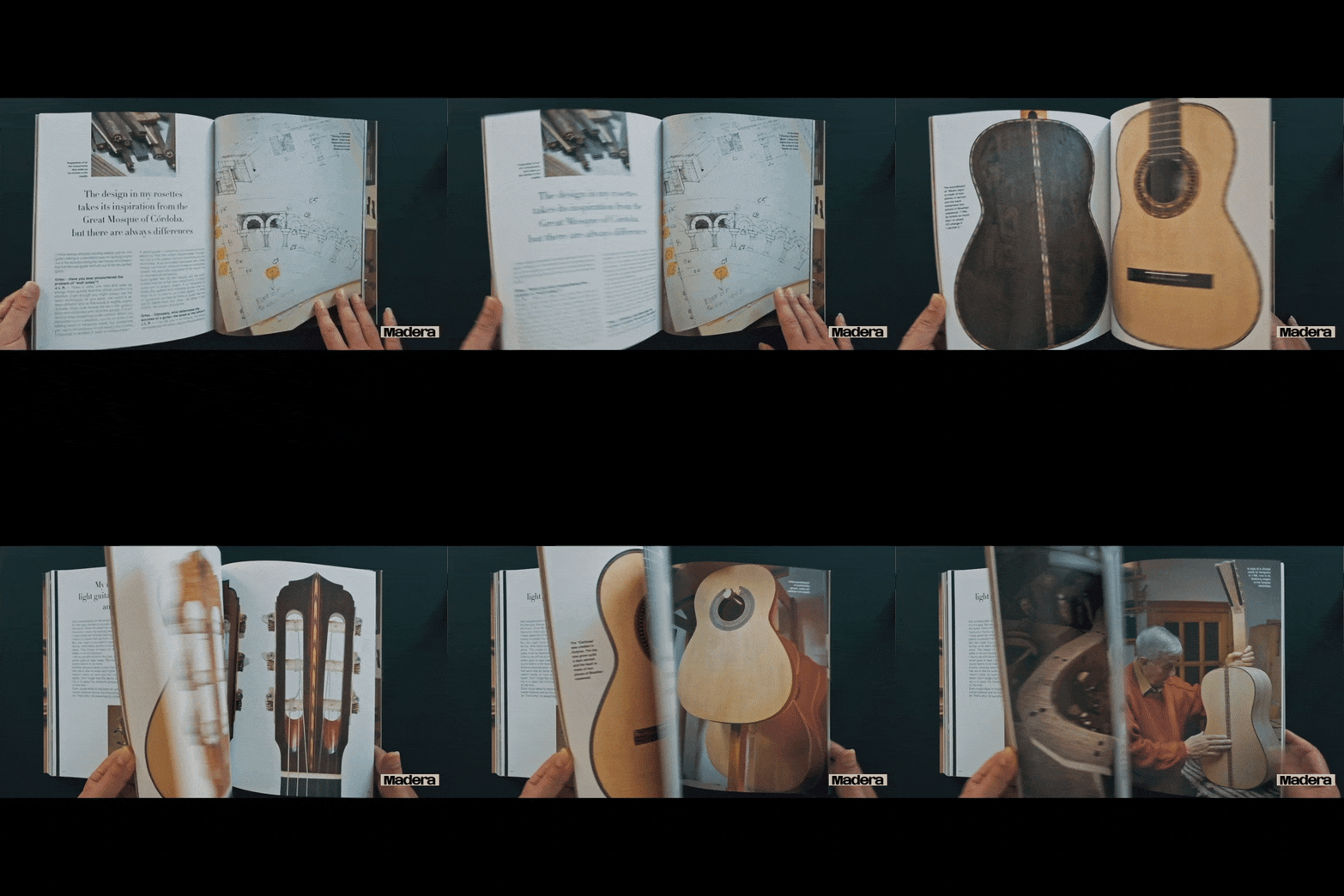
The Spanish Method comprises a step-by-step method of guitar construction, illustrated by numerous photographs and drawings. The method of making a guitar is presented with great clarity. So that even the newcomer to this fascinating craft will be able to produce a very good instrument.
Making Master Guitars is the major reference book covering the history, design and construction of the Spanish Classical Guitar. It supersedes all other books on the subject, and is the only reference required by those wishing to construct instruments based closely on the work of the world’s greatest luthiers.
Making Master Guitars is a craftsman’s handbook, and is unique in that it included nine separate plans of instruments made by the following internationally famous makers: Antonio de Torres, Hermann Hauser I, Santos Hernandez, Hernandez y Aguado, Ignacio Fleta, Robert Bouchet, Daniel Friederich and Jose Romanillos. The author examined many instruments by these makers, and, where possible, the factual information in the book was obtained from the makers themselves.
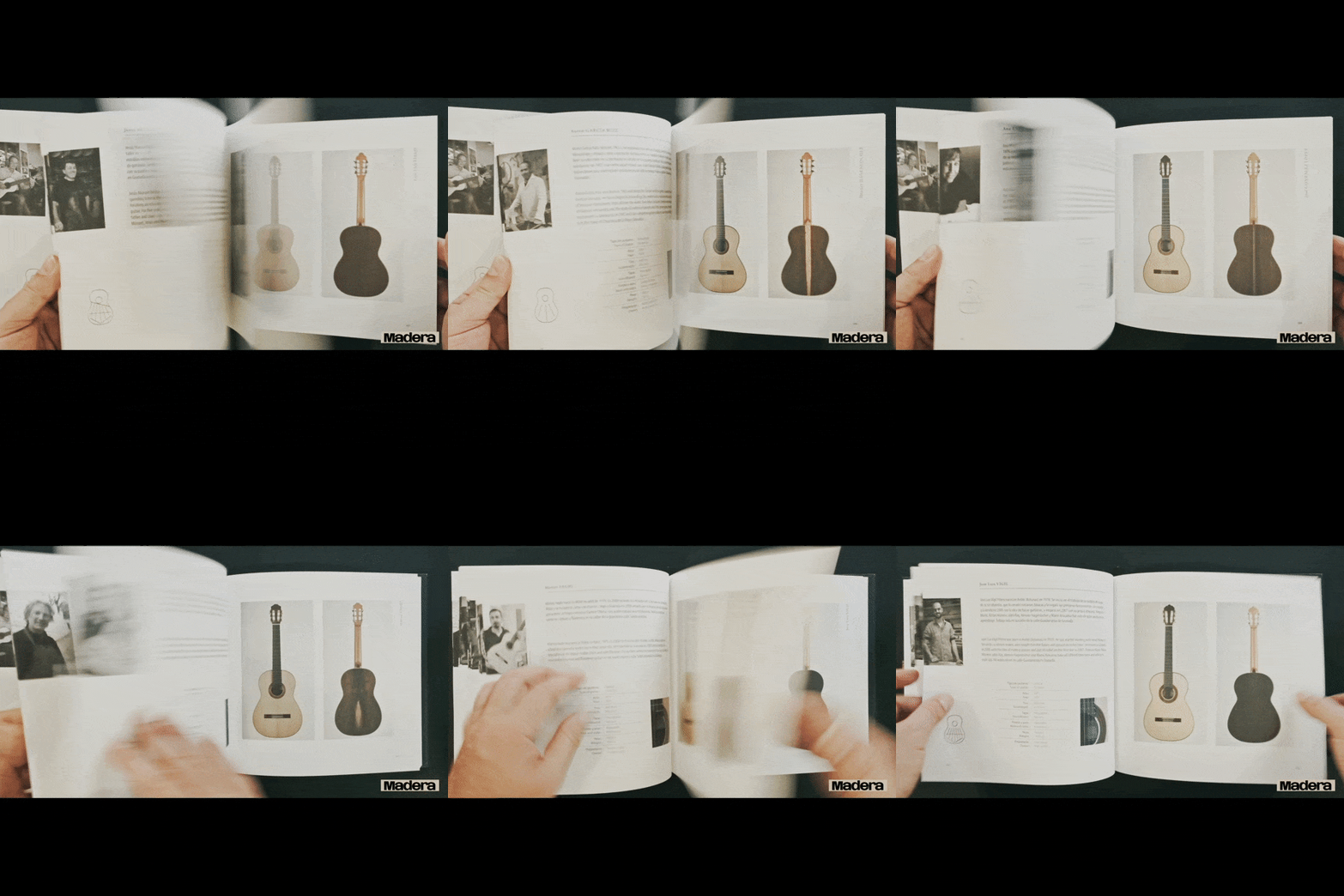
Part One of the book is devoted to separate chapters on each maker. The reader will find historical information about the life of, and influences on each maker, as well as detailed sets of working drawings for their guitars. Many photographs are also included.
Part Two provides essential information about the tools, materials and working environment needed by the guitar maker.
Part Three comprises a step-by-step description of the traditional Spanish method of guitar construction, illustrated with numerous photographs and drawings. The method of making a guitar is presented with great clarity, so that even the newcomer to this fascinating craft will be able to produce a superb instrument. The book is essential reading for the maker and the historian, providing a unique record of the different methods of guitar design and strutting systems that have evolved since Antonio de Torres first defined the essential characteristics of the modern classical guitars in the 1850s.
336 pages 538 black and white photographs, line drawings, sketches and plans.
Author: Roy Courtnall
Press reviews:
Roy Courtnall has combined the detailed work of the scholar with the practical insights of the craftsman. The book has a wealth of beautiful photographs and clear illustrations, packing a massive amount of information into a concise forma. It is a delight for any guitar enthusiast – from player to maker.
Clearly written instructions, together with excellent drawings and photographs, have established Making Master Guitars as an essential teaching aid on our Classical Guitar Making Course.
CONTENTS
List of Illustrations
Acknowledgements
Preface
Technical Terms
Part 1: The Master Makers and their Guitars
-
Antonio de Torres
-
Santos Hernández
-
Hermann Hauser
-
Enrique García
-
Ignacio Fleta
-
Robert Bouchet
-
Daniel Friederich
-
José Romanillos
Part 2: Workshop, Tools and Materials
9. Workshop and Tools
10. Materials
Part 3: Guitar Construction – The Spanish Method
Introduction
11. Solera
12. Neck and Head
13. Rosette
14. Soundboard
15. Strutting
16. Back
17. Linings
18. Soundboard, Neck and End-block Assembly
19. Assembly: Ribs and Linings
20. Assembly: Back
21. Fingerboard and Binding
22. Bridge
23. Final Shaping of the Neck
24. Action and Stringing Up
25. Varnishing and Polishing
Appendix 1 Conversion Tables
Appendix 2 Fret Distance Tables
Appendix 3 Suppliers of Materials, Tools and Plans
Bibliography
Index